Published on June 26, 2026
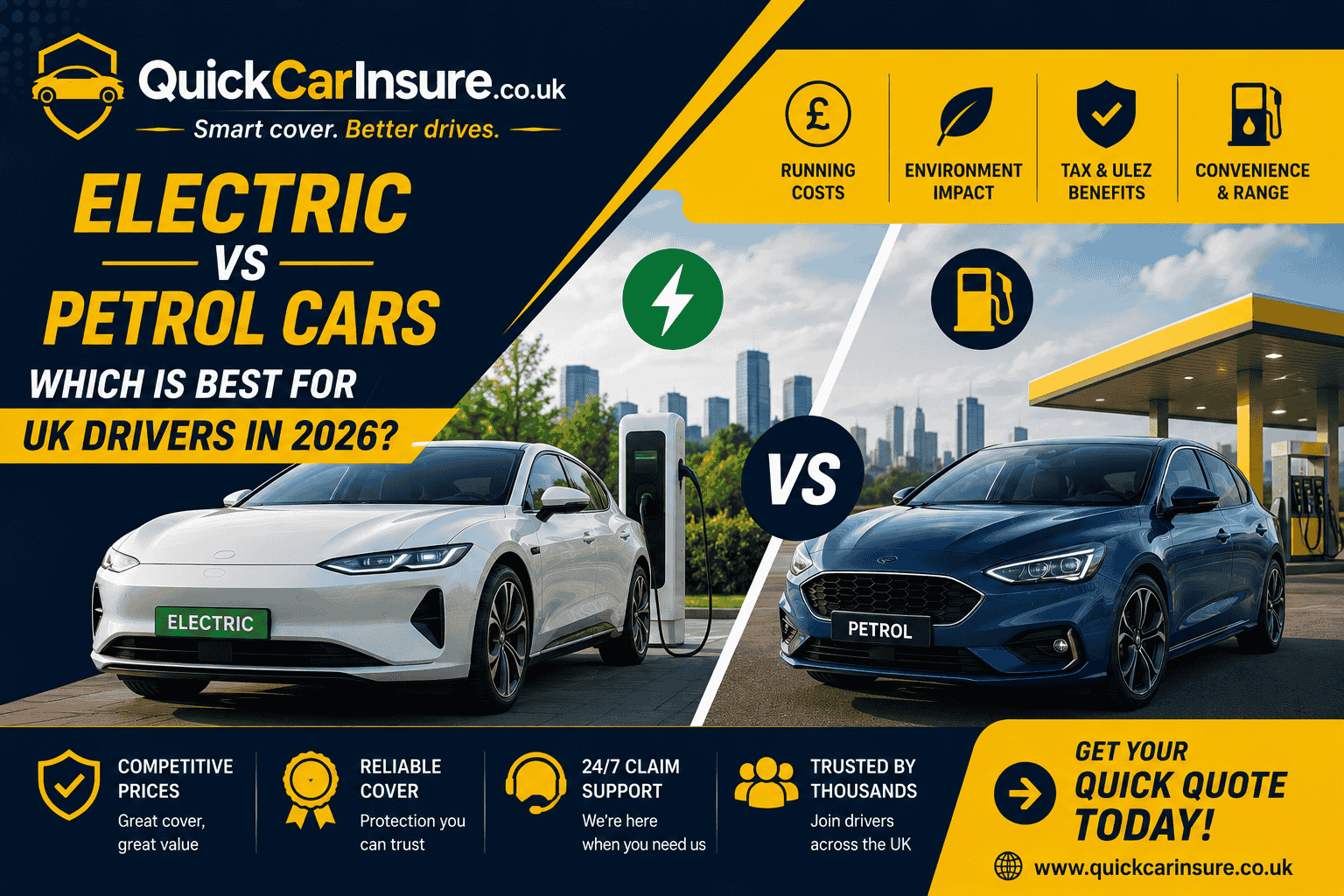
Electric vs Petrol Cars Which Is Best for UK Drivers in 2026
Choosing between an electric car and a petrol car has become one of the biggest decisions for UK motorists. With electric vehicle technology improving rapidly and petrol vehicles still offering familiar convenience, many drivers are unsure which option suits their lifestyle.
Both vehicle types have advantages and disadvantages depending on your budget, driving habits, and long-term plans. Whether you're buying your first car, upgrading your current vehicle, or borrowing one for a short period, understanding the key differences will help you make the right choice.
At QuickCarInsure.co.uk, we help drivers stay protected with flexible temporary car insurance, making it easier to drive different vehicles without committing to an annual policy.
How Electric Cars Work
Electric vehicles (EVs) use rechargeable batteries to power an electric motor instead of a traditional combustion engine.
Rather than filling up at a petrol station, drivers recharge their vehicles using:
- Home charging units
- Public charging stations
- Rapid motorway chargers
- Workplace charging points
Electric motors deliver power instantly, making acceleration smooth, quiet, and efficient.
How Petrol Cars Work
Petrol vehicles rely on an internal combustion engine that burns fuel to create power.
Drivers simply refuel at petrol stations, making them ideal for long-distance travel without lengthy charging stops.
Petrol cars remain the most common vehicles on UK roads thanks to their widespread infrastructure and generally lower purchase prices.
Electric vs Petrol Cars: Key Differences
| Feature | Electric Cars | Petrol Cars |
|---|---|---|
| Fuel | Electricity | Petrol |
| Running Costs | Lower | Higher |
| Purchase Price | Usually Higher | Usually Lower |
| Maintenance | Less Frequent | More Regular |
| Emissions | Zero Tailpipe Emissions | Produces CO₂ |
| Refuelling Time | 20 mins–8 hrs | Around 5 minutes |
| Noise | Very Quiet | Engine Noise |
| Long Journeys | Requires Charging Stops | Easy Refuelling |
Purchase Price
One of the biggest differences is the upfront cost.
Electric cars generally cost more because battery technology remains expensive. However, prices continue to fall as manufacturers produce more electric vehicles.
Petrol cars are usually more affordable initially and offer a wider choice for buyers with smaller budgets.
Running Costs
Electric vehicles are significantly cheaper to run.
Charging an EV at home often costs far less than filling a petrol tank, especially if you charge overnight using off-peak electricity tariffs.
Electric cars also have:
- Fewer moving parts
- No engine oil changes
- Less brake wear due to regenerative braking
- Lower servicing costs
Petrol vehicles require more frequent maintenance, including oil changes, filters, spark plugs, and exhaust repairs.
Environmental Impact
Electric vehicles produce zero exhaust emissions while driving, helping reduce air pollution and greenhouse gas emissions.
Although manufacturing EV batteries requires considerable energy, most studies show electric cars create fewer lifetime emissions than petrol vehicles.
Petrol engines continue releasing carbon dioxide (CO₂) and other pollutants every time they're driven.
Charging vs Refuelling
Electric Cars
Charging options include:
- Home chargers
- Fast public chargers
- Rapid motorway chargers
Charging times vary depending on battery size and charger type, ranging from around 30 minutes to several hours.
Petrol Cars
Refuelling takes only a few minutes and petrol stations are available throughout the UK.
For drivers regularly covering long motorway journeys, petrol cars still offer greater convenience.
Driving Experience
Many drivers are surprised by how enjoyable electric vehicles feel.
Benefits include:
- Instant acceleration
- Smooth driving
- Quiet cabins
- Less vibration
Petrol vehicles provide:
- Familiar engine sound
- Longer driving range
- Faster refuelling
- More choice across different budgets
The better option depends entirely on personal preference.
Long-Distance Travel
If you regularly travel hundreds of miles, petrol vehicles may still offer greater flexibility.
Electric vehicles continue improving their driving range, with many newer models exceeding 250–350 miles per charge.
However, longer journeys require planning charging stops, whereas petrol drivers simply refill and continue.
Maintenance Comparison
Electric vehicles generally require less maintenance because they contain fewer mechanical components.
Common servicing for petrol cars includes:
- Engine oil
- Timing belts
- Air filters
- Fuel filters
- Exhaust systems
Electric vehicles eliminate many of these maintenance costs.
Which Car Is Better for City Driving?
Electric cars perform exceptionally well in urban environments.
Advantages include:
- Lower running costs
- Easy stop-start driving
- Quiet operation
- No tailpipe emissions
Drivers who mainly commute locally often benefit most from switching to electric.
Which Car Is Better for Motorway Driving?
Petrol vehicles remain a strong option for frequent motorway users.
Benefits include:
- Quick refuelling
- Longer uninterrupted journeys
- Greater availability of fuel stations
- Less planning required
However, expanding charging infrastructure means electric cars are becoming increasingly practical for motorway travel too.
Should You Choose an Electric or Petrol Car?
Your decision depends on your driving habits.
An electric vehicle may suit you if you:
- Drive mostly locally
- Have access to home charging
- Want lower running costs
- Prefer environmentally friendly driving
A petrol vehicle may be better if you:
- Regularly travel long distances
- Need quick refuelling
- Have a smaller purchase budget
- Prefer traditional driving
Temporary Insurance for Electric and Petrol Cars
Whether you're borrowing an electric vehicle, test-driving a petrol car, or sharing driving responsibilities on a road trip, having the right insurance is essential.
QuickCarInsure.co.uk offers flexible temporary car insurance designed for short-term driving needs. Instead of paying for an annual policy you may not need, temporary cover allows you to insure a vehicle for the exact period required.
This makes it ideal for:
- Test drives
- Borrowing a friend's or family member's car
- Weekend trips
- Holiday driving
- Emergency vehicle use
Final Thoughts
Electric vehicles continue growing in popularity thanks to lower running costs, quieter driving, and reduced emissions. Meanwhile, petrol cars remain an excellent choice for drivers who value convenience, affordability, and long-distance flexibility.
No matter which vehicle you choose, ensuring you have the correct insurance is just as important as selecting the right car.
At QuickCarInsure.co.uk, we provide flexible temporary car insurance that helps UK drivers stay protected whenever they need short-term cover, whether they're driving an electric car, petrol car, or borrowing a vehicle for a few hours or several days.