Published on June 27, 2026
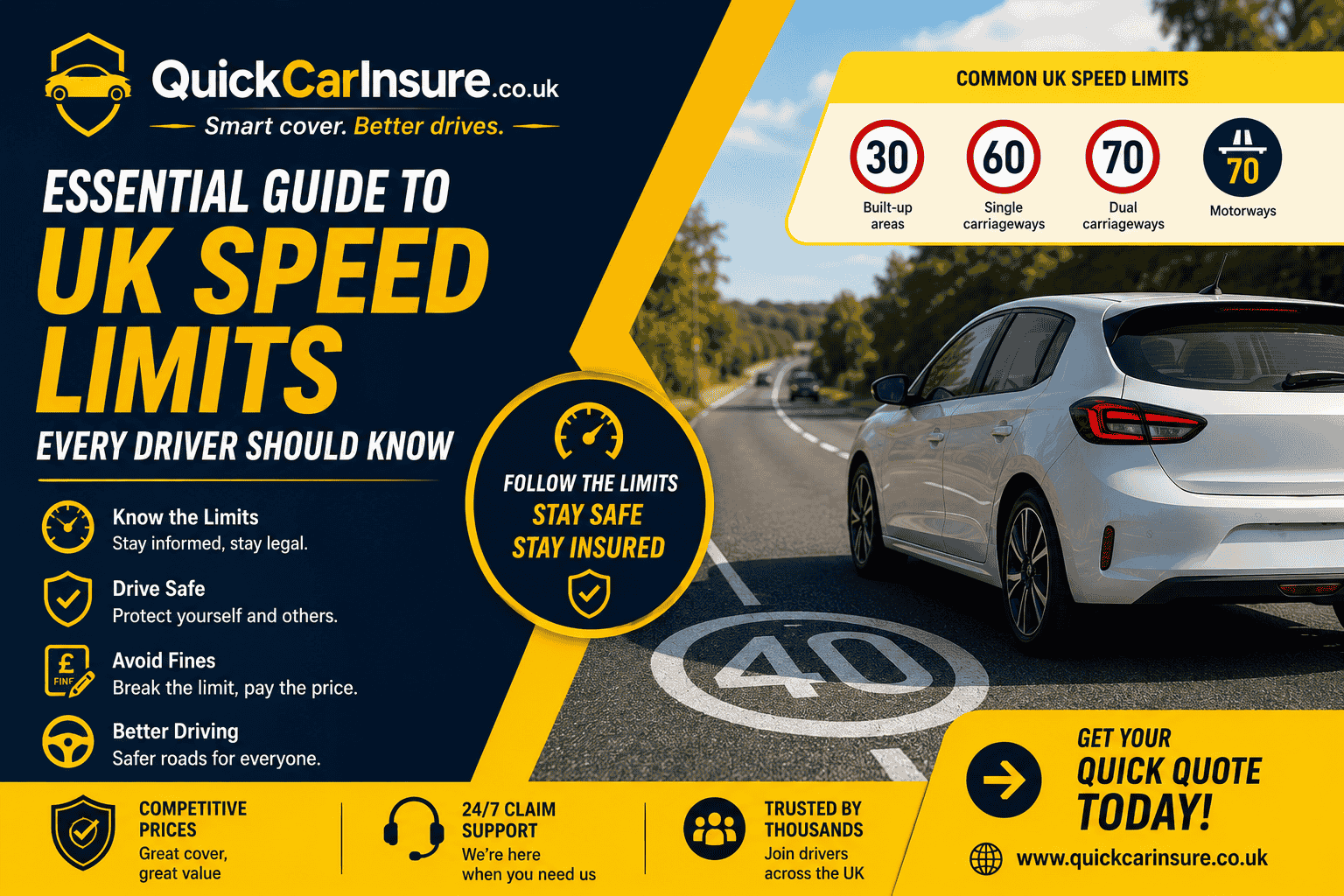
Essential Guide to UK Speed Limits Every Driver Should Know
Understanding UK speed limits is one of the most important parts of safe driving. Whether you're a learner driver, an experienced motorist, or borrowing a vehicle for a short trip, knowing the correct speed limits helps protect you, your passengers, and other road users.
Driving above the speed limit can result in fines, penalty points, increased insurance costs, and in serious cases, disqualification from driving. In this guide, QuickCarInsure.co.uk explains how UK speed limits work, the different road types, penalties for speeding, and practical tips to help you stay safe on every journey.
What Are UK Speed Limits?
Speed limits are the maximum legal speeds drivers are allowed to travel on public roads. These limits vary depending on the type of road, vehicle, weather conditions, and local regulations.
Speed limits are designed to:
- Improve road safety
- Reduce the severity of collisions
- Improve traffic flow
- Lower vehicle emissions
- Protect pedestrians and cyclists
Remember, the posted speed limit is a maximum, not a target. Drivers should always adjust their speed according to road, weather, and traffic conditions.
National Speed Limits in the UK
For standard cars and motorcycles, the national speed limits are:
| Road Type | Maximum Speed |
|---|---|
| Built-up areas | 30 mph |
| Single carriageways | 60 mph |
| Dual carriageways | 70 mph |
| Motorways | 70 mph |
Different speed limits may apply for vehicles towing trailers, motorhomes, vans, buses, and larger commercial vehicles.
Local Speed Limits
Many towns and cities introduce lower speed limits to improve safety.
Common examples include:
- 20 mph zones near schools and residential streets
- 30 mph limits in built-up urban areas
- Reduced speed limits near hospitals, shopping centres, and busy pedestrian crossings
Always watch for roadside signs, as local councils can introduce different limits where necessary.
Variable Speed Limits
Variable speed limits are commonly found on smart motorways and busy A-roads.
Electronic overhead signs automatically change speed limits depending on:
- Heavy traffic
- Roadworks
- Accidents
- Poor weather
- Emergency situations
These displayed limits are legally enforceable and must always be followed.
Understanding UK Speed Limit Signs
Drivers should recognise the main speed limit signs immediately.
These include:
- National Speed Limit sign
- Fixed speed limit signs (20, 30, 40, 50, 60, and 70 mph)
- Variable electronic motorway signs
- Temporary speed restriction signs during roadworks
Learning these signs is essential for both the UK Theory Test and Practical Driving Test.
How Speed Limits Are Enforced
Police and local authorities use several methods to monitor speeding offences.
These include:
- Fixed speed cameras
- Average speed camera systems
- Mobile speed camera units
- Police patrol vehicles
- Handheld laser speed detection devices
Many roads clearly display camera warning signs, although mobile enforcement units may not always be visible.
Penalties for Speeding
Driving above the speed limit can lead to serious consequences.
Possible penalties include:
- Fixed penalty fines
- Penalty points on your licence
- Speed Awareness Courses (where eligible)
- Court appearances for serious offences
- Driving disqualification in severe cases
Accumulating penalty points may also increase the cost of future insurance premiums.
Tips for Staying Within the Speed Limit
Keeping within the speed limit becomes easier with good driving habits.
Here are some practical tips:
- Watch roadside speed limit signs carefully.
- Reduce speed in poor weather.
- Use cruise control on long motorway journeys where appropriate.
- Follow navigation systems that display current speed limits.
- Allow extra stopping distance in rain, snow, or fog.
- Never rely solely on other drivers' speeds.
Safe driving is always more important than arriving a few minutes earlier.
Are Speed Limits Tested During the Driving Test?
Yes.
Learner drivers are expected to understand:
- National speed limits
- Local speed limit signs
- Road markings
- Variable speed limits
- Safe speed selection
Both the Theory Test and Practical Driving Test assess your understanding of speed limits and your ability to drive safely within them.
Borrowing a Car? Make Sure You're Properly Insured
If you're borrowing a family member's or friend's vehicle, you should never assume you're automatically insured.
Whether you're:
- Practising driving
- Sharing driving duties
- Borrowing a vehicle for a day
- Taking a long journey
it's important to arrange suitable insurance before driving.
QuickCarInsure.co.uk offers flexible temporary car insurance designed for short-term driving. Cover can be arranged for hours, days, or several weeks, making it an ideal solution when you don't need an annual policy.
Final Thoughts
Understanding UK speed limits is essential for every driver. Following the correct limits not only keeps you within the law but also helps protect everyone using the road.
By staying alert, recognising speed limit signs, adjusting your speed for road conditions, and ensuring you have the right insurance, you'll enjoy safer and more confident journeys.
If you're borrowing a vehicle or only need insurance for a short period, QuickCarInsure.co.uk provides flexible temporary car insurance that helps keep you protected whenever you get behind the wheel.