Published on June 15, 2026
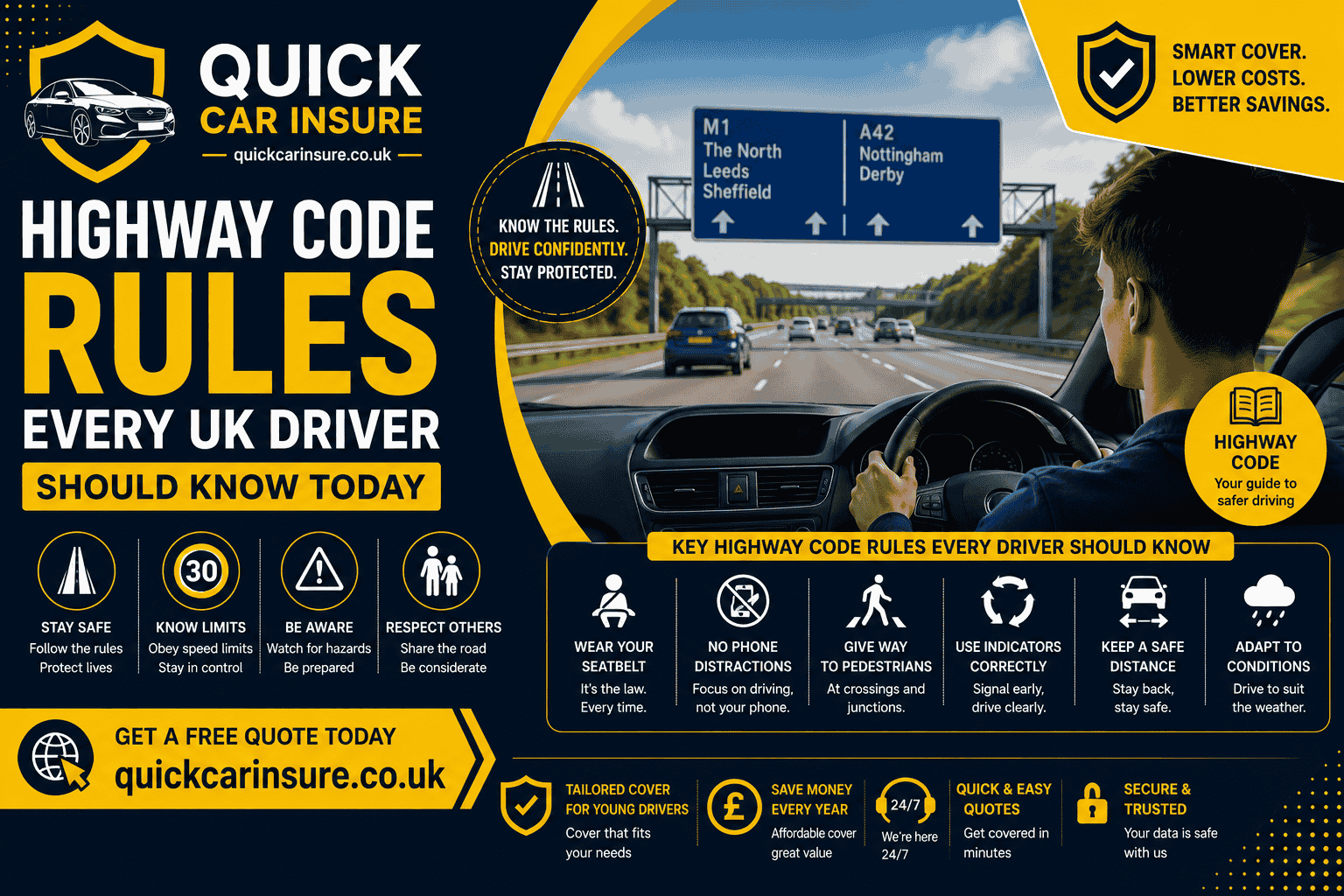
Highway Code Rules Every UK Driver Should Know Today
The UK Highway Code is one of the most important resources for anyone who uses the road. Whether you're a learner driver, an experienced motorist, a cyclist, or even a pedestrian, understanding Highway Code rules helps keep everyone safe.
Many drivers remember the basics from their driving lessons, but the Highway Code is updated regularly. New road safety measures, changing vehicle technology, and updated traffic regulations mean that some rules may have changed since you first passed your test.
In this guide, QuickCarInsure.co.uk highlights some of the most important Highway Code rules, lesser-known regulations, and recent updates that every UK road user should know.
What Is the Highway Code?
The Highway Code is an official guide containing rules, advice, and information for all road users across England, Scotland, and Wales.
Its purpose is to:
-
Improve road safety
-
Reduce accidents
-
Encourage responsible driving
-
Protect vulnerable road users
-
Promote efficient use of roads
The Code applies to:
-
Car drivers
-
Motorcyclists
-
Cyclists
-
Pedestrians
-
Horse riders
-
Mobility scooter users
-
Commercial vehicle drivers
Although not every rule carries a legal penalty, understanding and following the Highway Code can help drivers avoid fines, points, and accidents.
What Does the Highway Code Cover?
The Highway Code contains guidance on a wide range of driving topics, including:
Road Signs and Markings
Drivers should understand all road signs, signals, and lane markings to drive safely and legally.
Speed Limits
The Code explains speed limits for:
-
Motorways
-
Dual carriageways
-
Single carriageways
-
Urban roads
It also covers speed restrictions for different vehicle types.
Right of Way Rules
Understanding who has priority at junctions, roundabouts, crossings, and narrow roads is essential for safe driving.
Vehicle Safety
The Code includes advice on:
-
Vehicle maintenance
-
Tyre safety
-
Lights and indicators
-
Windscreen visibility
Weather Conditions
Drivers are provided guidance on driving safely in:
-
Rain
-
Fog
-
Snow
-
Ice
-
Strong winds
Lesser-Known Highway Code Rules
Many drivers are surprised to learn that some everyday habits can actually break Highway Code rules.
Flashing Headlights
Headlights should only be flashed to make other road users aware of your presence.
They should not be used to:
-
Say thank you
-
Invite another driver to proceed
-
Express frustration
Using Your Horn
Your horn should only be used when your vehicle is moving and to warn others of potential danger.
Using it unnecessarily may be considered careless behaviour.
Parking Direction Matters
At night, drivers should not park facing against the direction of traffic on a public road unless parked in a designated parking area.
Hazard Lights
Hazard warning lights are designed to alert other drivers to a hazard or obstruction.
They should not be used as a courtesy signal.
Leaving a Vehicle Running
Many motorists leave their car running during winter to warm it up or clear frost.
However, leaving a vehicle unattended while the engine is running can result in penalties and may increase theft risks.
Mini Roundabouts
Drivers must travel around mini roundabouts and should not simply drive over the painted circle, even if the road appears clear.
Dirty Number Plates
Vehicle registration plates, lights, and indicators must remain visible and clean at all times.
Mud, snow, or dirt obscuring them could lead to penalties.
Pets in Vehicles
Animals must be properly restrained while travelling.
An unrestrained pet can distract the driver and create a serious safety risk for everyone in the vehicle.
Important Highway Code Updates Drivers Should Know
Recent changes have introduced new responsibilities for road users.
The Hierarchy of Road Users
One of the most significant updates is the introduction of the "Hierarchy of Road Users."
This system recognises that certain road users are more vulnerable than others.
The hierarchy generally places:
-
Pedestrians
-
Cyclists
-
Horse riders
-
Motorcyclists
-
Cars
-
Vans
-
Heavy vehicles
Drivers operating larger vehicles are expected to take greater responsibility for reducing danger to more vulnerable road users.
Priority for Pedestrians
Drivers should now give way to pedestrians who are:
-
Crossing a road
-
Waiting to cross at junctions
This rule aims to improve pedestrian safety and reduce collisions.
Protecting Cyclists
Drivers should avoid cutting across cyclists when turning into or out of junctions.
Extra care should be taken when overtaking cyclists and sharing road space.
Mobile Phone Rules
Mobile phone regulations have become much stricter in recent years.
Drivers are prohibited from holding or using a handheld device while driving for almost any purpose.
This includes:
-
Making calls
-
Sending messages
-
Taking photos
-
Recording videos
-
Browsing apps
-
Using handheld sat-nav devices
The rules apply even when stationary in traffic or waiting at traffic lights.
Using a phone illegally can result in:
-
Penalty points
-
Significant fines
-
Increased insurance costs
Electric Vehicle Charging Rules
As electric vehicles become more popular, new guidance has been introduced regarding charging safety.
Drivers should:
-
Park close to charging points
-
Avoid creating trip hazards with cables
-
Return charging equipment correctly after use
Following these recommendations helps keep charging areas safe and accessible.
Why Understanding the Highway Code Matters
Many drivers only revisit the Highway Code when preparing for their theory test.
However, road laws and safety recommendations evolve over time.
Regularly reviewing the Highway Code can help:
-
Improve driving confidence
-
Reduce accident risks
-
Avoid fines and penalty points
-
Stay updated with legal changes
-
Protect other road users
For new drivers, understanding these rules is particularly important because accumulating points shortly after passing a test can have serious consequences.
Learning Beyond the Theory Test
There are several ways to stay up to date with the Highway Code:
-
Read the official online version
-
Purchase the latest Highway Code book
-
Use Highway Code learning apps
-
Complete online quizzes
-
Follow road safety updates regularly
Refreshing your knowledge every year can help keep you safe and compliant on UK roads.
Learner Driver Insurance from QuickCarInsure.co.uk
Learning the Highway Code is only one step towards becoming a safe and confident driver. Practical experience is equally important.
QuickCarInsure.co.uk offers flexible learner driver insurance that allows learners to gain additional supervised driving experience in a family member's or friend's vehicle.
Benefits include:
-
Flexible policy lengths
-
Affordable cover options
-
Protection for the vehicle owner
-
Additional driving practice outside formal lessons
This extra experience can help learners build confidence before taking their practical driving test.
Final Thoughts
The Highway Code remains one of the most valuable resources available to UK road users. While many rules are well known, there are numerous lesser-known regulations and recent updates that drivers should understand.
By staying informed and regularly refreshing your knowledge, you can improve road safety, avoid penalties, and become a more responsible driver.
For learner driver insurance, temporary cover, and practical driving support, visit QuickCarInsure.co.uk and explore insurance solutions designed to keep you moving safely.