Published on June 28, 2026
Uncommon Road Signs in the UK and Their Meanings
Understanding UK road signs is a core part of being a safe, responsible driver—and it is especially critical if you are currently preparing for your driving test. While everyday signs like speed limits and stop signs become second nature, the UK road network features several rarer signs that can easily catch motorists off guard.
In this comprehensive guide by Quickcarinsure.co.uk, we break down the different categories of traffic signs and highlight some of the most uncommon road signs you might encounter across the UK.
The Three Core Types of UK Road Signs
Before diving into the rare symbols, it helps to understand how British traffic signs are structured. They are categorized by shape and color, which instantly tells you the nature of the message.
1. Circular Road Signs (Mandatory Orders)
Circular signs give instructions that you must follow by law. Ignoring them is a legal offence.
-
Blue Circles: Give positive instructions (e.g., "turn left ahead" or indicating dedicated lanes for buses and cycles).
-
Red Rings/Circles: Indicate prohibitions, telling you what you cannot do (e.g., maximum speed limits or "no entry").
2. Rectangular Road Signs (Information & Guidance)
Rectangular signs provide helpful information, directions, and geographic context. Their colors change depending on the road network:
-
Blue Rectangles: Used on motorways for upcoming destinations, or on local roads to show specific access rules.
-
Green Rectangles: Found on primary routes (like A-roads) to guide traffic toward major destinations.
-
White Rectangles: Used for local or non-primary routes, often featuring black borders and text. They are also used as supplementary plates under warning signs to give extra context (e.g., distances or specific hazards).
-
Brown Rectangles: Dedicated to tourist information, directing drivers to attractions, museums, zoos, and campsites.
3. Triangular Road Signs (Hazard Warnings)
Triangular signs feature a red border and a white background. They do not give orders; instead, they warn you of upcoming dangers or changing road layouts (e.g., sharp bends, hidden junctions, or narrowing roads) so you can adjust your speed in time.
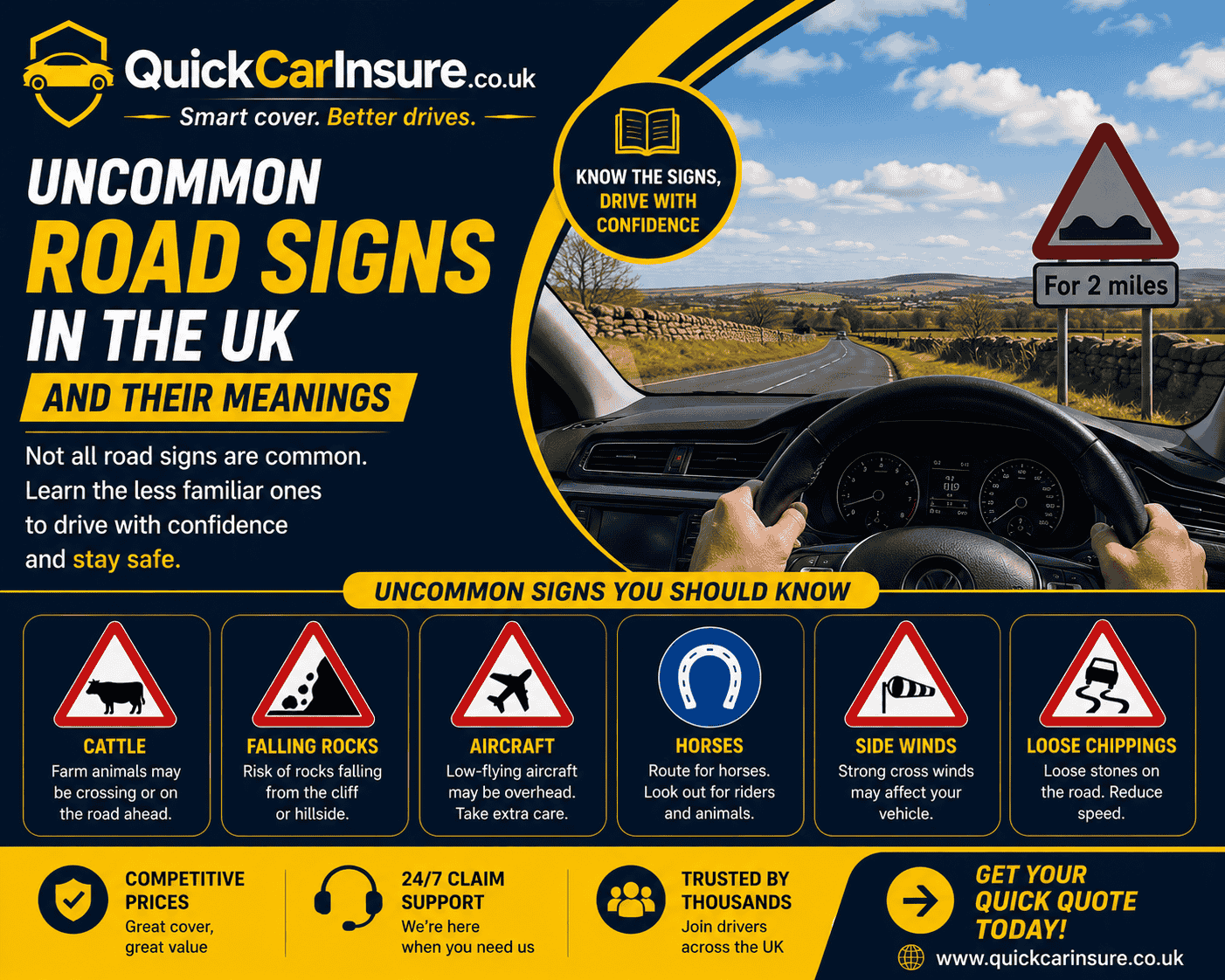
13 Uncommon UK Road Signs You Need to Know
Migratory Toads Crossing
-
What it looks like: A triangle with a toad silhouette.
-
Meaning: Installed only at officially approved sites, this sign warns drivers to watch out for migrating toads, particularly during their spring breeding season. Drivers should reduce speed at night to protect local wildlife.
Slow-Moving Military Vehicles
-
What it looks like: A warning triangle containing a tank silhouette.
-
Meaning: Usually positioned near military bases, barracks, or training grounds. It alerts drivers that heavy, slow-moving armored vehicles may be crossing or traveling along the public highway.
Quayside or Riverbank
-
What it looks like: A triangle depicting a car falling off a pier into water.
-
Meaning: Warns motorists that the road ends ahead at a riverbank, dock, or quayside. It is highly crucial in low-visibility or foggy conditions where the edge of the water isn't easily visible.
No Horse-Drawn Vehicles
-
What it looks like: A regulatory red circle with a horse and carriage crossed out or displayed inside.
-
Meaning: Horse-drawn carriages are strictly prohibited on this stretch of road. This is usually due to local bylaws, narrow streets, or to protect pedestrianized zones.
Designated Quiet Lane
-
What it looks like: A rectangular sign showing a car, a cyclist, and a horse rider sharing the path.
-
Meaning: Marks the beginning of a designated 'Quiet Lane' in rural areas. These are minor roads intended for shared use by walkers, joggers, cyclists, and riders. Drivers must maintain a very low speed and expect vulnerable road users.
No Vehicles Carrying Explosives
-
What it looks like: A red circle showing a vehicle with an explosive blast graphic.
-
Meaning: Prohibits any commercial vehicles transporting hazardous or explosive materials from entering the zone. These are typically placed before long tunnels or heavily populated urban centers.
Wild Horses or Ponies Ahead
-
What it looks like: A warning triangle featuring a horse silhouette.
-
Meaning: Common in rural areas and national parks like the New Forest or Dartmoor. It warns drivers that untamed horses or ponies roam free and could suddenly step onto the road.
Wild Fowl in Road
-
What it looks like: A triangle with a duck silhouette.
-
Meaning: Placed near wetlands, ponds, or nature reserves where ducks, geese, or other wild fowl frequently cross the road. Drivers should be prepared to slow down or stop safely.
Ford Crossing
-
What it looks like: A warning triangle with the word "FORD" or wavy lines representing water.
-
Meaning: Indicates a shallow river or stream crossing over the road surface. Drivers must check the water depth indicators before deciding whether it is safe to cross.
Railway Level Crossing Without Barriers
-
What it looks like: A warning triangle featuring an old-fashioned steam train icon.
-
Meaning: Alerts you to an upcoming railway crossing that does not have automated gates or barriers. Motorists must approach with extreme caution, stop, look, and listen for oncoming trains.
Low-Flying Aircraft or Sudden Noise
-
What it looks like: A triangle containing an airplane silhouette.
-
Meaning: Positioned near airport runways or airfields. It warns drivers that low-flying planes or sudden jet engine noise could startle them, advising them to stay focused on the wheel.
Falling Debris or Rocks
-
What it looks like: A triangle showing rocks tumbling down a cliffside.
-
Meaning: Found in mountainous, coastal, or hilly regions. It warns that rocks or debris may have fallen into the road, or could fall as you pass.
Cattle Crossing
-
What it looks like: A triangle with a cow silhouette.
-
Meaning: Common in farming communities and rural lanes, warning drivers that livestock may be crossing the road or being herded along the highway.
Frequently Asked Questions (FAQs)
Why is it essential to obey UK traffic signs?
Road signs keep traffic moving safely, protect vulnerable road users, and prevent chaotic accidents. Ignoring mandatory signs (the circular ones) is a traffic violation and can lead to severe penalties, including hefty fines, penalty points on your driving licence, or a court-ordered driving ban.
Will these rare signs appear on my Theory Test?
Yes. The DVSA theory test pool includes all official UK road signs, even the uncommon ones. Knowing these signs inside out ensures you pass both your theory and practical driving tests successfully.
Get Covered with Quickcarinsure.co.uk
The absolute best way to master UK road signs is through real-world practice behind the wheel. If you are learning to drive or supervising a learner, having the right insurance cover is vital for peace of mind.
At Quickcarinsure.co.uk, we offer flexible, fully comprehensive temporary car insurance tailored for learner drivers. Whether you need cover for a single day to practice parking or up to several months to perfect your road skills before the big test, we've got you covered.
Get a fast quote with Quickcarinsure.co.uk today and hit the road with complete confidence!