Published on June 15, 2026
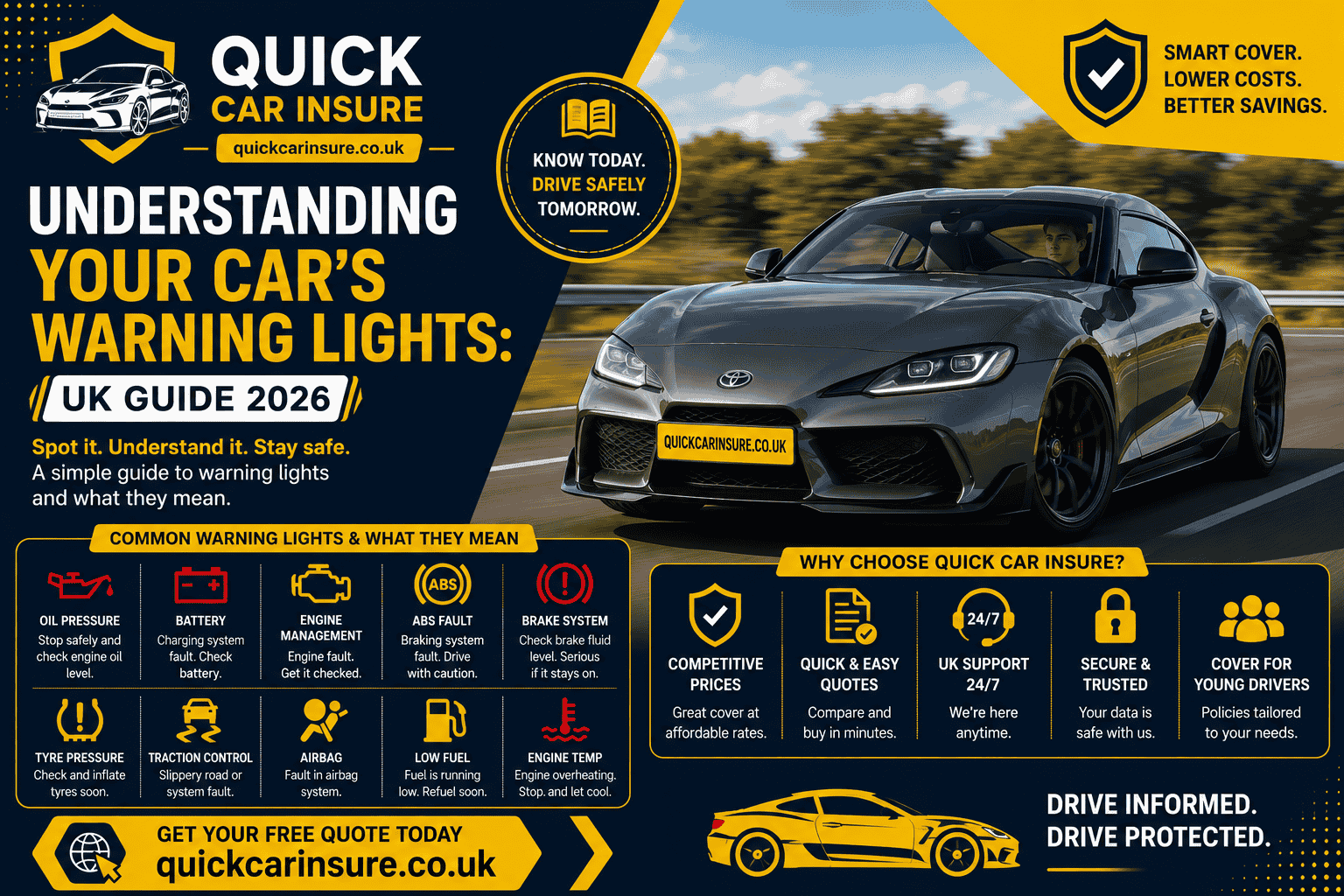
Understanding Your Car’s Warning Lights: UK Guide 2026
Every modern vehicle is equipped with dashboard warning lights designed to alert drivers when something requires attention. While some indicators are harmless reminders, others can signal serious mechanical or safety issues that need immediate action.
Unfortunately, many motorists either ignore warning lights or are unsure what they mean. Understanding your car’s warning symbols can help prevent expensive repairs, reduce breakdown risks, and keep you safe on UK roads.
In this guide, QuickCarInsure.co.uk explains the most common car warning lights, what they mean, and the steps you should take when they appear.
Why Dashboard Warning Lights Matter
Dashboard warning lights are your vehicle's way of communicating potential problems. Modern cars contain dozens of sensors that monitor everything from tyre pressure and oil levels to engine performance and safety systems.
Ignoring a warning light can lead to:
- Costly repair bills
- Reduced fuel efficiency
- Vehicle breakdowns
- MOT failures
- Increased safety risks
Understanding these symbols allows you to act quickly and avoid more serious damage.
The Different Types of Warning Lights
Most dashboard warning lights are colour-coded according to severity.
| Colour | Meaning |
|---|---|
| 🔴 Red | Serious issue requiring immediate attention |
| 🟠 Amber/Yellow | Warning that should be checked soon |
| 🟢 Green | System operating normally |
| 🔵 Blue | Information or active feature notification |
As a general rule:
- Red lights = Stop when safe
- Amber lights = Investigate soon
- Green and blue lights = Informational only
Common Dashboard Warning Lights Explained
Fuel Warning Light
This is one of the most recognised dashboard symbols.
What it means:
Your fuel level has dropped below a safe reserve amount.
What to do:
Refuel as soon as possible to avoid running out of fuel and damaging certain engine components.
Door, Boot or Bonnet Open Warning
Modern vehicles detect when a door, boot, or bonnet isn't fully closed.
What it means:
A panel is not securely shut.
What to do:
Stop safely and ensure everything is properly closed before continuing your journey.
Seat Belt Reminder
This warning appears when the driver or passengers have not fastened their seat belts.
What it means:
One or more occupants are not wearing a seat belt.
What to do:
Fasten all seat belts before driving.
Service Reminder Light
Many vehicles display a service indicator based on mileage or time.
What it means:
Your vehicle is due for maintenance.
What to do:
Book a service to keep your vehicle running efficiently and maintain manufacturer recommendations.
Critical Red Warning Lights You Should Never Ignore
Red warning lights often indicate a safety-critical issue.
Brake System Warning Light
Possible causes:
- Low brake fluid
- Brake system fault
- Handbrake engaged
What to do:
If the handbrake is fully released and the light remains on, stop driving and seek professional assistance immediately.
Engine Coolant Temperature Warning
Possible causes:
- Engine overheating
- Coolant leak
- Cooling system failure
What to do:
Pull over safely, switch off the engine, and allow it to cool. Continuing to drive could cause severe engine damage.
Oil Pressure Warning Light
Possible causes:
- Low oil level
- Oil pump failure
- Internal engine issue
What to do:
Stop driving immediately and check the oil level. If the warning remains, arrange professional inspection before restarting the vehicle.
Power Steering Warning Light
Possible causes:
- Steering system malfunction
- Electronic power steering failure
What to do:
Steering may become significantly heavier. Have the vehicle checked as soon as possible.
Airbag Warning Light
Possible causes:
- Faulty airbag sensor
- Airbag system malfunction
What to do:
Arrange a diagnostic inspection. The airbags may not deploy correctly during a collision.
Battery Charging System Warning
Possible causes:
- Alternator failure
- Battery issue
- Electrical fault
What to do:
Your battery may stop charging while driving. Have the system checked immediately.
Amber Warning Lights You Shouldn't Ignore
Amber lights are usually less urgent but still require attention.
Check Engine Light
One of the most common warning symbols.
Possible causes:
- Sensor malfunction
- Emissions issue
- Engine performance problem
What to do:
Book a diagnostic check as soon as possible. While the vehicle may still drive normally, the issue could worsen over time.
Tyre Pressure Monitoring System (TPMS)
What it means:
One or more tyres have incorrect pressure.
What to do:
Check tyre pressures and inflate according to manufacturer specifications.
Proper tyre pressure improves:
- Fuel economy
- Handling
- Braking performance
- Tyre lifespan
Oil Level Warning
Unlike oil pressure warnings, this typically relates to oil quantity.
What to do:
Check and top up engine oil if necessary.
Brake Pad Wear Warning
What it means:
Brake pads may be nearing replacement.
What to do:
Arrange a brake inspection promptly.
Bulb Failure Warning
What it means:
A headlight, brake light, indicator, or other bulb has failed.
What to do:
Replace the faulty bulb as soon as possible to remain road legal.
Suspension Warning Light
Possible causes:
- Air suspension fault
- Shock absorber issue
- Sensor malfunction
What to do:
Have the suspension system inspected to maintain safe vehicle handling.
Electric and Hybrid Vehicle Warning Lights
As electric vehicles become increasingly popular across the UK, drivers may encounter additional dashboard indicators.
These may include:
- Battery system warnings
- Charging system alerts
- Regenerative braking notifications
- High-voltage system faults
Always consult your vehicle handbook for manufacturer-specific guidance.
Can You Reset Warning Lights Yourself?
Some dashboard lights can be reset after resolving the underlying issue.
Examples include:
- Tyre pressure monitoring systems
- Service reminders
- Oil change notifications
However, warning lights should never be reset simply to make them disappear.
The underlying problem should always be identified and fixed first.
How to Prevent Warning Lights Appearing
Preventative maintenance is the best way to avoid dashboard warnings.
Follow Regular Servicing Schedules
Routine servicing helps identify problems before they become serious.
Check Fluid Levels Regularly
Monitor:
- Engine oil
- Coolant
- Brake fluid
- Windscreen washer fluid
Inspect Tyres Frequently
Check:
- Pressure
- Tread depth
- General condition
Replace Worn Components Early
Brake pads, batteries, and filters should be replaced before failure occurs.
What to Do If a Warning Light Appears While Driving
If a warning light appears:
Green or Blue Light
Continue driving normally.
Amber Light
Drive cautiously and arrange a check as soon as practical.
Red Light
Stop safely when possible and assess the situation immediately.
If you are unsure about the severity of the warning, seek roadside assistance or professional advice.
Stay Protected with QuickCarInsure.co.uk
Vehicle problems can happen unexpectedly. If your car needs repairs and you need to borrow a friend's or family member's vehicle, having the right insurance is essential.
At QuickCarInsure.co.uk, we provide flexible temporary car insurance solutions that can help keep you moving while your vehicle is off the road.
Whether you need cover for a few hours, a day, or several weeks, temporary insurance can offer a convenient and cost-effective solution without affecting the vehicle owner's existing policy.
Final Thoughts
Dashboard warning lights are there to protect both you and your vehicle. Understanding what each symbol means allows you to respond quickly, avoid costly repairs, and stay safe on the road.
By paying attention to warning indicators, maintaining your vehicle properly, and acting promptly when issues arise, you can enjoy safer and more reliable motoring throughout 2026 and beyond.
For more driving tips, insurance guidance, and temporary cover options, visit QuickCarInsure.co.uk.