Published on June 21, 2026
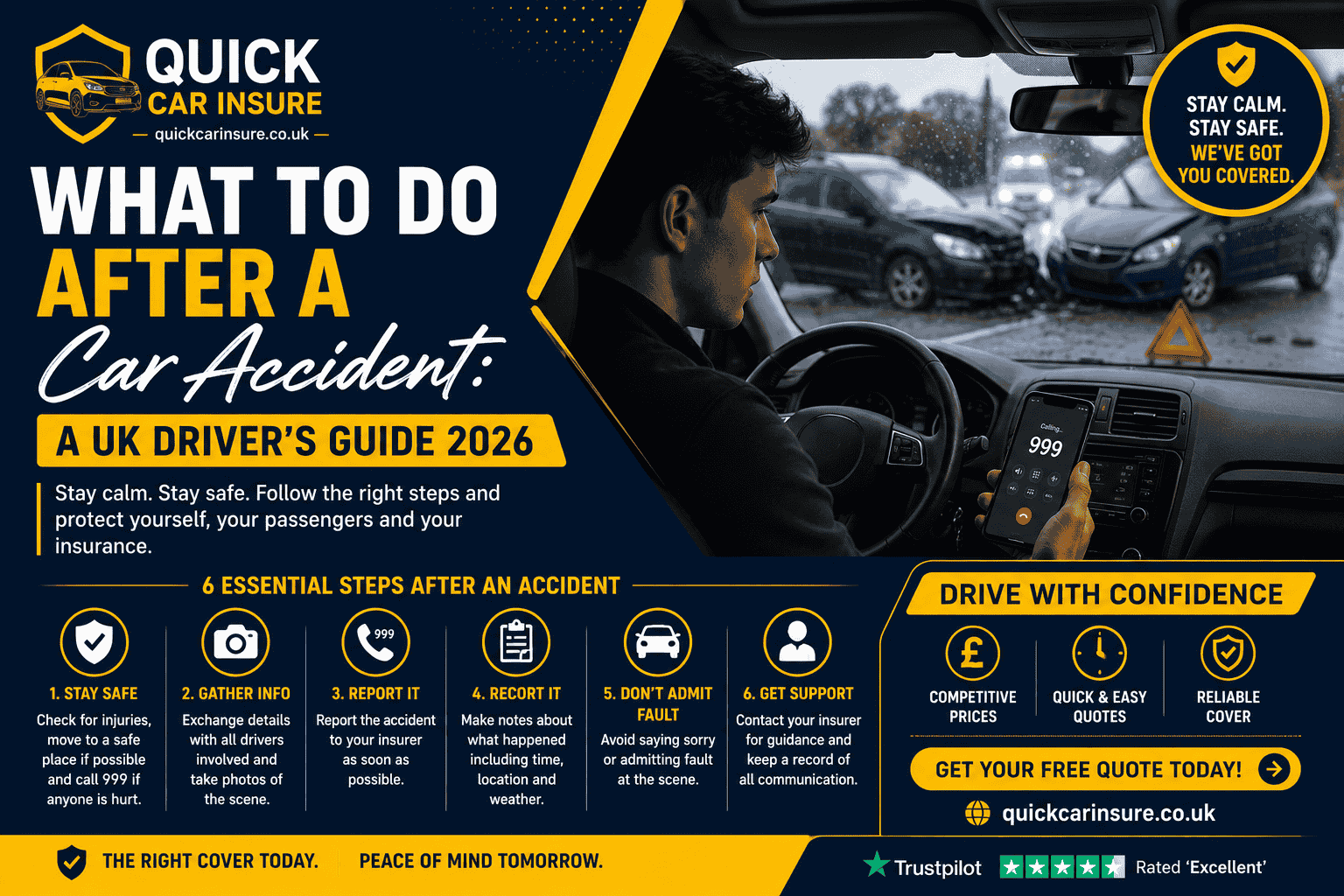
What to Do After a Car Accident: A UK Driver's Guide 2026
Car accidents can happen unexpectedly, whether it’s a minor bump in traffic or a more serious collision. In such situations, it’s easy to panic, but knowing what to do after a car accident can help protect your safety, your legal rights, and any future insurance claim.
This guide from QuickCarInsure.co.uk explains the essential steps every UK driver should take immediately after an accident and in the days that follow.
Prioritise Safety First
The first and most important step after any road accident is to make sure everyone involved is safe.
Immediately After the Collision:
- Stop your vehicle as soon as it is safe to do so.
- Turn off the engine.
- Switch on your hazard warning lights.
- Check yourself and your passengers for injuries.
- Assess whether other road users need assistance.
Under UK law, failing to stop after an accident can result in serious penalties.
Call Emergency Services if Necessary
You should contact emergency services immediately if:
- Anyone is injured.
- The road is blocked.
- There is a fire risk.
- A vehicle is causing a danger to other road users.
Dial 999 in emergencies and provide clear information about your location and the situation.
Move to a Safe Location
If it is safe and practical:
- Exit the vehicle carefully.
- Move passengers and pets away from traffic.
- Stand behind a safety barrier if available.
- Avoid remaining in the roadway.
Your safety should always take priority over vehicle damage.
Stay Calm and Avoid Admitting Fault
After an accident, emotions often run high. While it’s natural to feel upset or apologetic, avoid admitting responsibility until all facts have been established.
Even a simple apology could later be interpreted as accepting fault.
Instead:
- Remain polite.
- Exchange details calmly.
- Focus on gathering accurate information.
Exchange Driver Information
UK law requires drivers involved in an accident to exchange details.
Make sure you collect:
- Full name
- Address
- Contact number
- Vehicle registration number
- Insurance provider details
- Insurance policy number (if available)
Provide the same information about yourself when requested.
Identify the Vehicle Owner
Sometimes the driver may not own the vehicle.
Examples include:
- Company vehicles
- Hire cars
- Family-owned cars
- Borrowed vehicles
If applicable, obtain the registered owner’s details as well.
Collect Witness Information
Independent witnesses can be extremely valuable if there is a dispute about what happened.
Ask witnesses for:
- Name
- Contact details
- Brief account of what they saw
Their statements may help support your version of events later.
Take Photos and Record Evidence
Smartphones make it easy to gather evidence at the scene.
Photograph:
- Vehicle damage
- Road position
- Skid marks
- Traffic signs
- Road conditions
- Weather conditions
You should also make written notes including:
- Date and time
- Exact location
- Traffic conditions
- Details of the accident
- Any visible injuries
The more evidence you have, the easier it can be when dealing with insurers.
Report Suspected Drink or Drug Driving
If you believe another driver may be under the influence of alcohol or drugs:
- Do not confront them.
- Contact the police.
- Use the non-emergency number 101 if there is no immediate danger.
Providing accurate information can help authorities investigate the situation.
Notify Your Insurance Provider Quickly
Regardless of who was at fault, you should inform your insurer as soon as possible.
Many insurance policies require accidents to be reported within a specific timeframe.
Failure to report an incident could:
- Delay claims processing
- Affect future claims
- Potentially invalidate your cover
Information Your Insurer May Request
When contacting your insurer, have the following ready:
Your Information
- Policy number
- Vehicle registration
- Personal contact details
Accident Information
- Date and time
- Location
- Description of events
Other Driver Details
- Name and address
- Registration number
- Insurance details
Providing complete and accurate information helps speed up the claims process.
Should You Report Minor Accidents?
Yes.
Even if:
- Damage appears minor.
- You do not intend to claim.
- The other driver seems unconcerned.
You should still notify your insurer.
The other driver could later decide to make a claim, and your insurer needs to be aware of the incident from the outset.
What Happens Next?
Once reported, your insurer may:
- Review evidence and photographs.
- Contact witnesses.
- Arrange vehicle inspections.
- Organise repairs.
- Determine liability.
Keeping detailed records will help ensure the process runs smoothly.
How to Be Better Prepared for Future Incidents
Consider keeping the following items in your vehicle:
- Pen and notepad
- Mobile phone charger
- Emergency contact numbers
- High-visibility vest
- Warning triangle (where appropriate)
Being prepared can make a stressful situation easier to manage.
QuickCarInsure.co.uk: Supporting UK Drivers When They Need Cover
Whether you're borrowing a vehicle, sharing driving responsibilities, or need flexible short-term cover, QuickCarInsure.co.uk helps drivers find suitable temporary and short-term insurance solutions quickly and conveniently.
Having the right insurance in place can provide valuable peace of mind should the unexpected happen on the road.
Final Thoughts
No driver expects to be involved in an accident, but knowing what to do after a collision can make a huge difference. By staying calm, prioritising safety, gathering evidence, and informing your insurer promptly, you'll be in a much stronger position if you need to make a claim.
Understanding the correct steps after a car accident helps protect both you and other road users while ensuring any insurance matters are handled as efficiently as possible.